Healthcare providers have to deal with cumbersome reporting, with approximately $39 billion spent per year in America complying with nearly 630 regulatory requirements. The heart of regulatory measures is good: to ensure that hospitals, public health agencies, and providers are giving the best care possible to their patients.
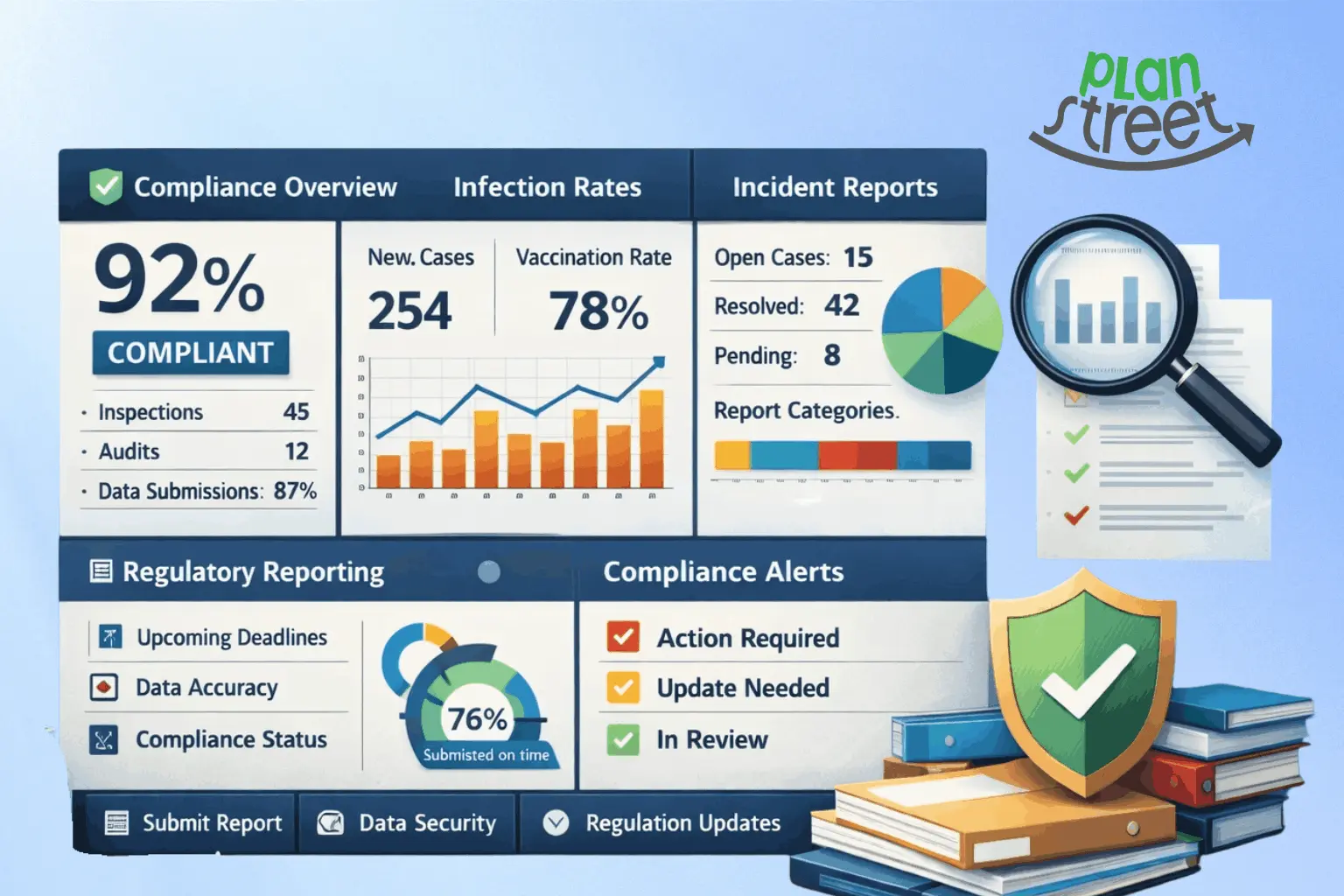
However, when case managers have to spend more time worrying about complying with regulations than caring for their clients, frustration builds. That's why it's critical to implement HIPAA-compliant public health compliance software that can streamline the compliance work for your team. In this article, we'll dive into what's driving these challenges and how modern technology can solve them.
Why Compliance Is Becoming More Complex for Public Health Agencies
The main issue is that the rules, expectations, and technology risks are moving faster than nonprofits and public health organizations can handle. Without improved workflows, case managers are expected to do more work in the same amount of time.
Here are a few of those breakthrough moments:
- The May 2016 Medicaid and CHIP Managed Care Final Rule: Created new reporting requirements for state-managed care programs and operations.
- Increased Enforcement of HIPAA: The HHS Office for Civil Rights issued $36 million in HIPAA violation fines in 2024, a 40% increase from 2023.
- CDC's Data Modernization Initiative: Agencies are pushed to implement timely electronic data, requiring them to retire legacy systems.
- Heavier reporting requirements: MCPAR, MLR, and multiple grant financial reports produce audit fatigue for organizations.
These complex standards put strain on healthcare administrators, grant managers, and other critical administrative team members.
The Hidden Cost of Manual Reporting and Documentation
Manual reporting and documentation look cheap on paper, but create significant costs that aren't easy to see right away. Wasted staff time, increased errors, compliance risk, and loss of funding opportunities are all byproducts of outdated workflows.
Here are where some of the costs creep in:
- Staff time and burnout: Staff waste hours reconciling spreadsheets, sorting through incorrect billing codes, and manually entering data from forms, making 95% of nonprofit leaders concerned about burnout for their staff.
- Compliance and audits: Manual data entry has an error rate of about 1%. This creates inconsistent documentation that can trigger an audit.
- Inaccessible data: When data is collected across different spreadsheets, it's difficult to see the big picture of program success. Nonprofit leaders struggle to quickly answer questions from funders or policymakers.
- Opportunity cost: Manual reporting requirements can more heavily burden small community-based organizations, diverting capacity from direct services and outreach for clients.
Many organizations stick with spreadsheets because software feels too complex or expensive. However, they underestimate the cumulative cost of staff time, delays, and errors over years.
HIPAA, CMS, and Local Regulatory Pressures Explained
Public health organizations sit in a three‑way squeeze. HIPAA pushes strict privacy and security. CMS (Centers for Medicare & Medicaid Services) pushes detailed clinical and financial reporting tied to payment. Finally, state and local regulators push broad population‑health duties and political oversight.
Pressures Faced From HIPAA
One of the biggest struggles with HIPAA for a health department is figuring out which part of the organization is a covered entity. HIPAA applies to providers, health plans, and clearinghouses and their business associates, but not to every function of public health. It can be difficult for community organizations to cover data requirements for HIPAA without freezing sharing across departments.
Public health organizations have to juggle the following HIPAA rules:
- Privacy Rule: Governs when and how PHI (public health information) can be used and disclosed. It also gives individuals rights to access their PHI, request amendments, and get an accounting of certain disclosures within defined timeframes. This creates tracking and workflow burdens.
- Security Rule: Applies to electronic PHI (ePHI) and demands administrative, physical, and technical safeguards. For a public health department, this means EHRs, immunization registries, surveillance systems, and more must be secure.
- Breach Notification Rule: Sets strict timelines when PHI is improperly accessed. Requires investigation of incidents, risk assessments, and formal notifications to affected individuals and HHS (US Department of Health and Human Services).
- Code Sets and Unique Identifiers: If your public health clinics bill electronically, they must use standard codes and the National Provider Identifier (NPI), so IT and billing teams have to align local systems to those standards.
Agencies must follow these rules, or they risk penalties ranging from $100–$1.5 million.
Pressures Faced From CMS
When they act as providers or plan administrators, organizations must meet CMS requirements around electronic transactions, quality reporting, grievances, utilization, and other metrics on strict schedules. What makes this challenging is the data‑quality expectations that rise year-over-year. When organizations don't have robust Medicaid and Medicare billing automation, it's a struggle to meet escalating requirements.
Plus, payment and participation often hinge on accurate, on-time submissions, so gaps in documentation or EHR capabilities can threaten reimbursement.
Pressures Faced From Local Regulatory Bodies
State law defines the scope of local public health authority. Some recent legislative trends have added political oversight boards and limited local emergency powers, cutting back on where local orders can be stricter than state rules.
However, local health departments must still deliver core services, including monitoring community health, enforcing environmental and communicable‑disease regulations, conducting inspections, and revising local rules. The additional hurdle is that all this work must be delivered under tighter scrutiny and with fragmented governance.
5 Ways Modern Technology Reduces Compliance Risk for Public Health Organizations
Technology like PlanStreet's public health program management platform reduces risk by standardizing work, locking down data, and automating the evidence you need for audits and funders.
1. Provides Audit-Ready Documentation and Real-Time Visibility
Instead of scattered emails and spreadsheets, CMS reporting automation creates an audit trail instantly. Every note, consent, contact, and case change is time‑stamped and linked to a user. When an organization undergoes an audit, they can easily:
- Prove services were delivered as claimed.
- Show that PHI was accessed appropriately.
- Respond quickly to prove compliance with real-time data.
2. Maintains Fewer Errors and Gaps in Records
Technology helps everyone use the same version of forms, spreadsheets, and other critical data collection tools. By standardizing forms, required fields, and validation rules, organizations reduce missing data, inconsistent coding, and typos that create compliance findings or denied claims.
3. Automates Public Health Reporting Without Adding Staff
Automated workflows ensure key steps happen in the right order and are documented, reducing "we forgot to document it" risk. Here's an example of what an automated intake workflow would look like for an organization using case management software like PlanStreet:
- Outreach worker or client initiates an online intake from a portal link; demographics, insurance, and consent forms are completed and e‑signed.
- PlanStreet auto‑creates the client record, tags them as eligible for specific programs (e.g., breast cancer screening, STD services) based on rules, and assigns a navigator.
- The navigator completes embedded clinical and SDOH assessments; high‑risk results automatically create referrals to specialty care, social services, or behavioral health providers, routed through the closed‑loop referral workflows.
- All actions are logged; supervisors monitor intake completeness and follow‑up timeliness from dashboards; when an auditor or funder asks "how did this client enter your system and what happened next?", staff export a full, time‑stamped intake‑to‑service trail in a few clicks.
Now, all of the information needed for intake reporting is in one easy-to-access location. This workflow can be repeated across all touchpoints in the organization, synthesizing processes without adding staff to take on the work.
If you want to see a workflow in action, check out how Pinnacle used PlanStreet to automate eligibility verification and claims submissions for their Home and Community Based Services (HCBS) nonprofit based in Minnesota.
4. Simplifies HIPAA and Privacy Protections
Software offers role‑based access and permissions that keep PHI visible only to appropriate staff. Systems log every access so you can investigate misuse or suspicious behavior easily, as there is a robust paper trail.
Case management software that offers secure hosting, encryption, and vendor controls on purpose‑built systems. These support HIPAA requirements more reliably than scrambled combinations of email, shared drives, and paper files.
5. Streamlines Reporting and Funder Compliance
Public health reporting tools can generate standard reports for grants, contracts, and boards using data already captured in the workflow. Your staff no longer has to deal with manual compilation or struggle with formula errors.
They support grant and contract compliance by tracking services against funder rules, eligibility criteria, and required outcomes. These analytics can flag when you are off‑track, so your team can course-correct before it becomes a budget or compliance issue.
Compliance Should Reduce Stress, Not Create It
Compliance is a critical piece of public health, ensuring that government and grant funding are allocated properly with their intended purpose. By utilizing modern government healthcare software like PlanStreet, public health departments and agencies can go above and beyond compliance requirements while leaving more time in the day to care for their clients.
If you have any questions, schedule an introductory call with our team at PlanStreet today.