There are over 100 million subspecialist healthcare referrals in the US every year, and only about half of those are seen to completion. Without strong referral coordination measures in place, nonprofit and government health organizations struggle with missing referrals and making connections between agencies. This leaves patients waiting months to see a doctor who can sufficiently solve their problems.
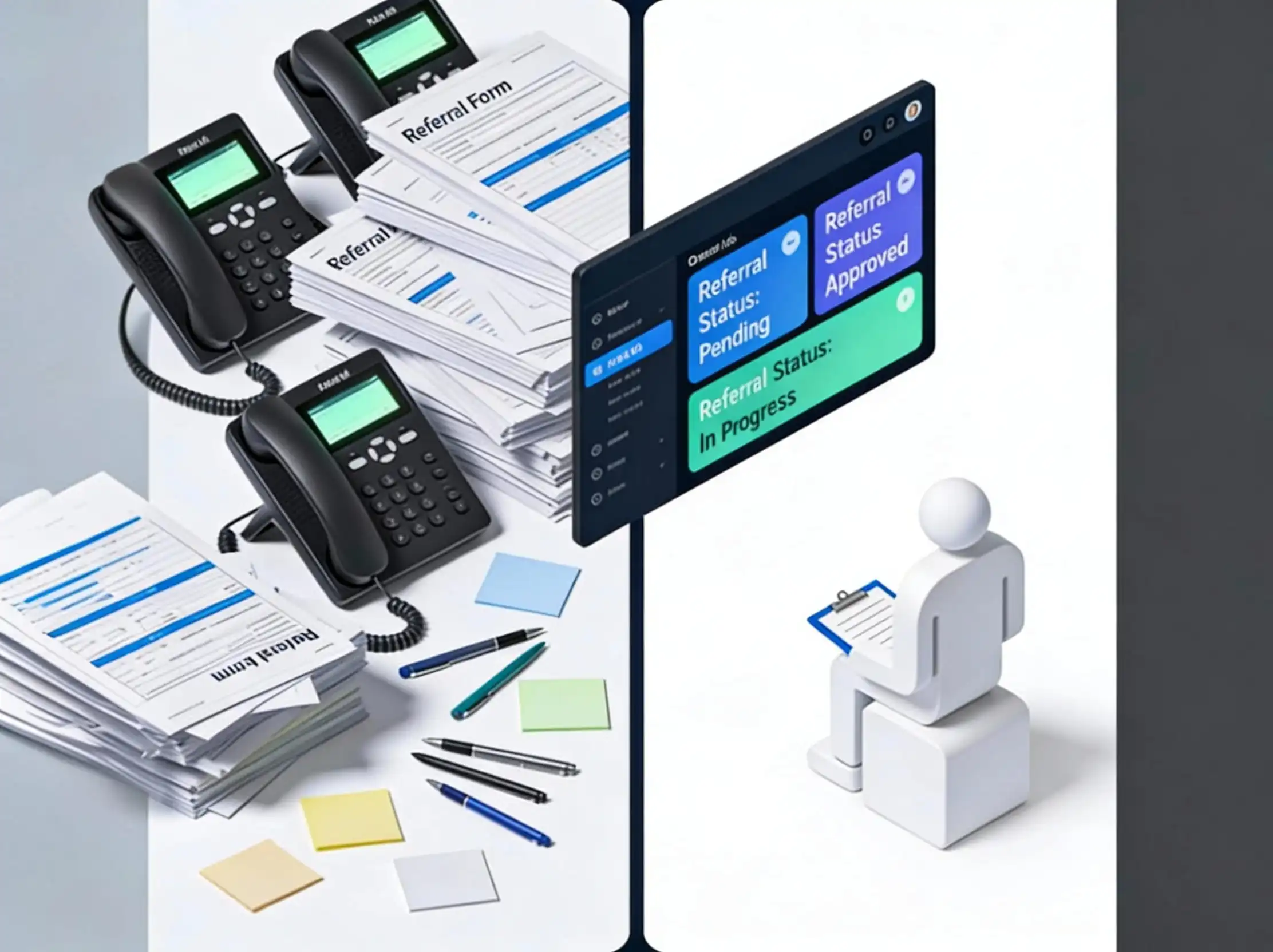
One of the biggest issues is a lack of a defined referral system, which ensures there is a close relationship among all levels of providers. Studies have shown that electronic referral and consultation systems like PlanStreet are more efficient and safer for patients than manual methods. In this article, we'll dive into public health referral challenges your team may be facing and how PlanStreet can help you carve a path through them, providing the best care possible for your clients.
The Challenges of Manual Referral Processes
Due to limited budgets, it can be difficult for nonprofits to integrate new systems. 95% of nonprofit leaders are concerned about staff burnout, with 50% unable to find new people to fill empty positions. This highlights how sticking to time-consuming manual referral processes drags down company morale by increasing their workload.
Inefficient referral tracking can cause numerous problems for both staff and clients, including:
- High risk of errors: Older tools like fax machines, phones, or pen and paper are more likely to include an error than an electronic submission.
- Difficulty "closing the loop": Without an interconnected electronic system, it can be difficult for referrers to see if an external appointment was completed or not.
- Lack of integration with existing systems: If data doesn't automatically transfer between programs, then there is a higher risk for error with manual data entry.
- Compliance hurdles: Strong HIPAA requirements make it difficult to share information across organizations.
- Barriers to follow-through: Lack of transportation or childcare, uncertain housing, or a non-flexible work schedule make it difficult for clients to get care. If no case managers are checking that the referral has been completed, then it may never be.
While these issues often stress staff, patients are the ones who truly suffer. Time lapsing in the referral process can lead to preventable harm and increased risk of malpractice allegations.
How PlanStreet Simplifies Referral Management
It's time to leave manual processes behind and switch to automated referral tracking. PlanStreet's referral management software was purpose-built for public health and social services. It was created to simplify every step of the referral process, making it easier for your team to see every request through to completion.
PlanStreet's closed-loop referral system simplifies the process through:
- Referral workflow automations: Customize processes and referral pathways aligned to your organization's needs, and then automate routing so that each person knows exactly which tasks they're responsible for.
- Real-time tracking: At any moment, your team can check to see if a referral has been "sent," "received," or "completed."
- Closed-loop referrals: You can work with each service provider to ensure that every step of the process is verified and documented, preventing leakage and improving case resolution.
- Grant reporting and compliance: Meet funding requirements with referral outcomes, client engagement data, and follow-up notes all in one place. You can create audit-ready reports that are simple to understand, so stakeholders can see the whole scope of your work.
- Integration capabilities: PlanStreet is a comprehensive public health case management software, so it's the only one you need. However, if you have an existing EHR that you prefer to use, you can set up API integrations to use it seamlessly with PlanStreet.
Actionable Strategy for Referral Management Success: 9 Steps to Software Adoption
Implementing any new software is a process, with the average for a nonprofit CRM to take about two months. To optimize your referral management with PlanStreet, we recommend the strategy below.
By following these steps, your team can:
- Streamline referral intake: Automate initial data entry to reduce errors.
- Track referrals effectively: Set up real-time tracking mechanisms for follow-ups and status updates.
- Integrate with external systems: Ensure seamless integration with EHRs, public health databases, and external agencies for better coordination.
Step 1. Define your referral partners
List out all of the referral destinations that you work with, both inside and outside of your organization. This can include (but is not limited to):
- Clinics
- Behavioral health
- Housing
- Food
- Transportation
For each, note what services accept referrals for it. You'll also need to decide what "closed loop" means for each of these people, such as whether the referral is confirmed or the outcome of the appointment is documented on the client's case record.
Be sure to build out the responsibilities of each person in the workflow, including who sends referrals, monitors status, and follows up when there's no response.
Step 2. Configure PlanStreet for intake and SDOH screenings
Next, you can utilize PlanStreet's form builder to capture client needs in structured fields. Implement federal and state requirements (for example, CalAIM HRSN) as much as possible so that you're collecting information that will keep your team compliant.
Your forms can include information such as:
- Questions about economic stability, including "What is your current work situation?"
- Questions about health and clinical care, including "How hard is it to get your medications and medical supplies when you need them?"
- Questions about social and community context, including "How often do you feel lonely or isolated from those around you?"
To streamline the intake process for your clients, configure validation and conditional logic so the highest-priority need triggers prompts for referrals (this way, your staff doesn't have to keep it all straight by memory).
Step 3. Set up referral partners and programs in the system
Now, you'll need to add the partners that you'll be working with. PlanStreet has this set up easily, so you can create a record for each partner with all the required information. Then, you can configure them to specific PlanStreet programs or activities to keep everything in the same case record.
Step 4. Design customizable workflows for referrals
Create specific workflows with automated notifications and reminders to ensure that no one slips through the cracks. For example, a workflow may be carried out as follows:
Draft → Sent → Received/Accepted → Scheduled → Completed → Unable to Serve (with reasons)
Your team can turn on alerts for key events (no response after X days, appointment missed, outcome not documented) so staff are prompted to follow up.
Step 5. Train staff on how to send and track referrals
It's crucial to have a training session with your staff on how to use the closed-loop referral system. Standardize the process for all of the documents and workflows you created in PlanStreet, and then schedule multiple training sessions to ensure staff feel comfortable with the new workflows.
Step 6. Use secure portals to close the loop
You can utilize PlanStreet's client portal for HIPAA-compliant messaging. Staff can communicate with external providers directly within PlanStreet to avoid complications using email or the phone. Set expectations and communicate the fields that need to be filled out to consider a referral completed. These can be items such as:
- Service rendered
- Date of service
- Case notes
- Follow-ups required
Step 7. Monitor referrals in real time
It's important to check the status of each referral. Use our customizable dashboards for real-time views. You can see where each referral is in the pipeline. Then, you can follow up on cases that have stalled or are particularly high risk.
Step 8. Use analytics for compliance and improvement
Power BI analytics allow your team to track trends and spot gaps before they become major problems. Track trends such as:
- Referral volumes by need
- Completion rates by partner
- Disparities by population
- Time-to-service
This can also be a great way to see which partners are the most communicative about referrals and which ones have high "unable to serve" rates.
Transform Your Referral Process with PlanStreet
Manual referral workflows leave your team stressed out with too much administrative burden on their plate. Even worse, clients get left behind, with referrals going unanswered and desperately needed care never seen to the finish line.
That's why we're so passionate about the work we do at PlanStreet. We help our clients improve efficiency to increase success in referral management.
Our clients have seen the benefits of PlanStreet's referral management system, including the New Jersey Children's Alliance. After implementation, their case processing time decreased by 30%, enabling a faster response to critical child welfare referrals across all 21 counties.
By using PlanStreet's closed-loop referral system, you can track all referrals from the initial request to successful resolution. Start the journey to referral management success and schedule a demo with our team today.