Nearly 66% of released state prisoners are rearrested within three years, and 82% are arrested at least once during a ten-year follow-up. These numbers don't exist in a vacuum—they are a result of fragmented systems that prevent recently released prisoners from accessing all the help they need to reenter society.
Case managers give these individuals a partner to help them navigate this complicated process. Housing and employment reentry programs work to connect people to open beds and jobs. But these professionals need elevated technology solutions like reentry case management software to reduce recidivism amongst their clients.
The Reality of Reentry: Why Stability Is Hard to Achieve
Stability is hard to achieve on reentry because people leave jail or prison with intersecting challenges around income, housing, health, and legal status. Those all hit in the first months after release.
Some of the barriers recently incarcerated individuals suffer through include:
- Employment discrimination: Formerly incarcerated people face unemployment rates over 27%, several times higher than the general population. Background checks and employer bias mean that a record often effectively removes someone from the hiring process, even for low‑wage work.
- Housing insecurity: Formerly incarcerated people are 10 times more likely to experience homelessness than the general public. Limited affordable housing overall, plus criminal‑history bans, leaves many people shuffling between couches, shelters, and the street.
- Health and Substance Use: People leaving custody often have high rates of chronic disease, mental illness, and substance use disorders, but are released with no insurance and weak connections to care. In the weeks after release, they are about 13 times more likely to die than the general population.
- Exclusion From Society and Benefits: Many people with felony convictions cannot access public benefits, public housing, or federal student aid. In some states, they lose or face hurdles regaining the right to vote. These "collateral consequences" persist long after a sentence ends.
- Documentation Challenges: Getting an ID, birth certificate, and licenses is essential for work, housing, and health care. These documents are often missing or hard to obtain quickly after release. Gaps in coordination mean benefits, prescriptions, and treatment plans may lapse at the moment of transition.
The Three Pillars of Successful Reentry
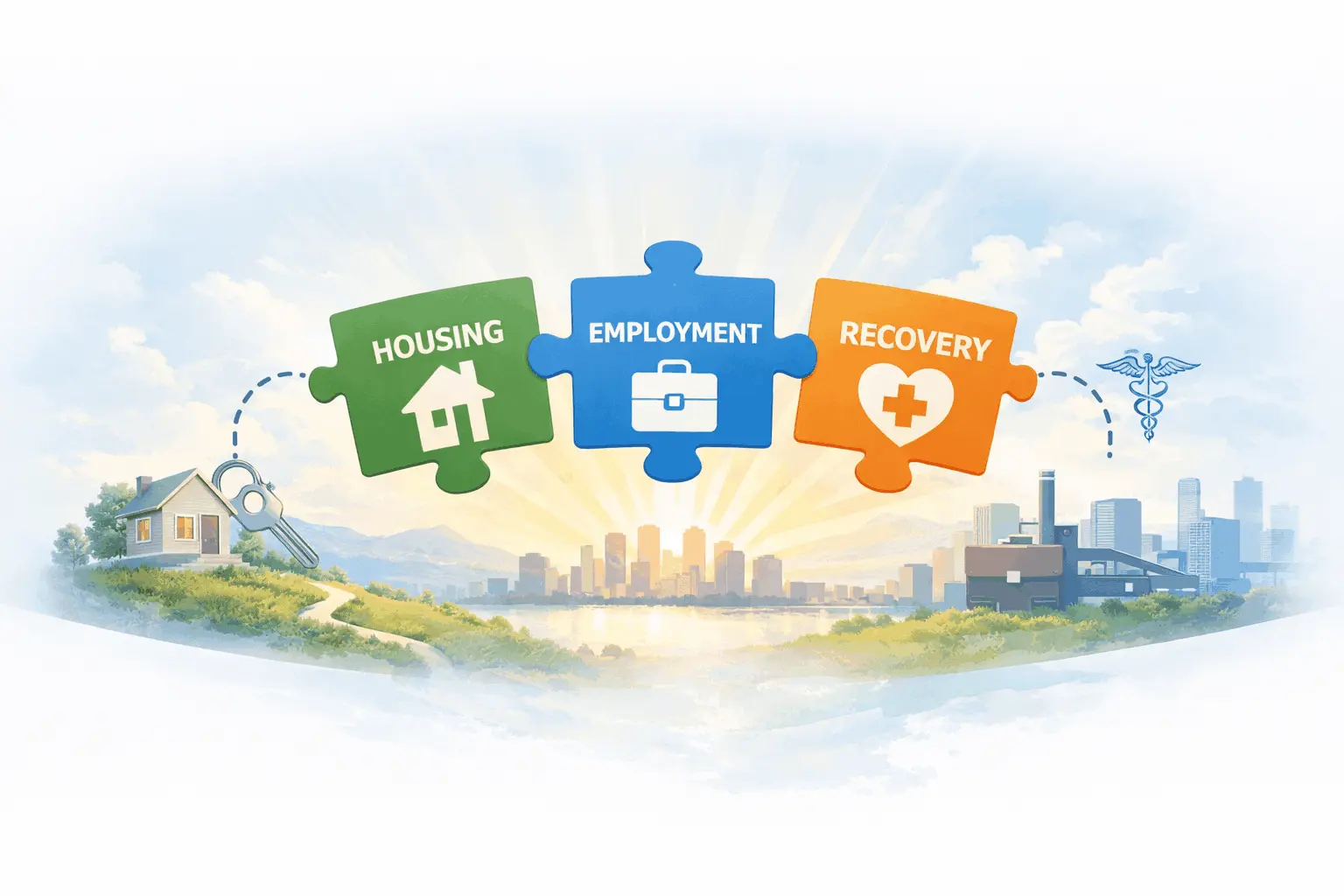
For people coming home from jail or prison, reentry only works when their basic needs are met: a safe place to sleep, a way to earn income, and consistent support for recovery and mental health. Together, these three pillars give case managers a practical framework for building individualized plans instead of reacting to crises one by one.
Housing Stability
Without stable housing, every other part of reentry becomes harder. When someone lives in a crowded shelter or on the street, it is nearly impossible to keep appointments, store medications, maintain employment, or comply with supervision requirements.
For reentry case managers, securing safe and appropriate housing is often the first critical step that makes service plans realistic. Software that centralizes referrals, tracks housing episodes, and flags when someone is at risk of losing their placement helps teams intervene before instability spirals into new charges.
Employment Pathways
A reliable income stream allows people recently released from jail to support themselves as they step back into society. Employment pathways connect people to training, supportive employers, and long-term career growth that can outlast the first months after release.
Reentry case managers help their clients:
- Identify employment readiness as part of the intake and assessment process.
- Coordinate referrals to workforce programs, training providers, and employers willing to hire people with records.
- Track job applications, interviews, placements, and retention over time.
- Integrate benefits screening so participants can receive earned income and food or housing assistance while they get on their feet.
With the right tools, reentry programs can see where participants are getting stuck. Transportation, documentation, background checks, and lack of training are all places where recently released individuals need extra help. Reentry data tracking software gives case managers a place to store this information and spot an issue before it becomes an offense.
Recovery & Behavioral Health
Many people leaving incarceration are managing substance use disorders, trauma, and chronic mental health conditions, all while navigating the stress of reentry. 37% of people who are incarcerated have a mental illness, and continuous care post-release helps reduce their relapse risk.
Case managers help clients navigate:
- Medication management
- Counseling
- Peer support
- Crisis services
These services help participants stay engaged, keeping them out of situations that would risk a return to incarceration.
When case managers can see behavioral health appointments, medications, and recovery goals in the same system as housing and employment data, they can respond quickly to early warning signs.
The Core Problem: Systems That Don't Work Together
Reentry case managers are trying to coordinate complex lives using tools and data that do not connect to each other. Disconnected systems turn what should be integrated planning into manual, error‑prone work that steals time from direct support.
This involves:
- Separate Systems: Logging into separate systems for jail data, probation notes, HMIS, and more means there is no access to real-time updates across services.
- Duplicate Data Entry: Case managers re‑enter the same data repeatedly into different portals, and manually call or email to confirm updates. All of this increases the chance of typos, outdated notes, and missed changes. It leaves less time for coaching, advocacy, and crisis response.
- Lack of Properly Measured Outcomes: Case managers often have to export data from multiple tools, clean it in spreadsheets, and manually match records to build basic reports. This reporting burden can delay insights and make it harder to advocate for the right resources.
Shifting From Siloed Programs to Holistic Case Management
Rather than thinking that a single housing and employment reentry program can break every barrier, nonprofits and government agencies are moving toward holistic case management. The case manager walks with a person from custody into the community. They coordinate support across housing, employment, health, and family stability. Each provider shares responsibility for outcomes within reentry programs software.
Unified case management systems support this by creating a single record that can be updated as people move between jail, transitional housing, workforce programs, and behavioral health. When everyone works from a shared profile, it becomes easier to build realistic service plans, manage risk, and track progress across multiple providers.
How Technology Like PlanStreet Enables Integrated Reentry
To improve outcomes for every person reentering society, technology must simplify coordination. Modern case management platforms allow reentry teams to consolidate information, speed up intake, and coordinate referral. PlanStreet's reentry case management software creates one system to manage participant journeys, from the first assessment through stabilization and long-term follow-up.
With PlanStreet, programs can:
- Build Unified Participant Profiles: Capture assessments, supervision requirements, housing history, employment milestones, and behavioral health referrals in one place.
- Create Intricate Case Plans: Personalized reporting and a case plan builder streamlines the process using information already collected.
- Reduce Repetitive Data Entry: Automated intake workflows make it easier to screen for housing needs, employment readiness, and behavioral health concerns early in the process.
- Integrate Referral Management: Simplify warm handoffs to housing providers, workforce boards, and treatment partners, while cross-program tracking gives a clear view of what services participants receive.
- Configurable Dashboards and Reports: Allow administrators to monitor caseloads, identify service gaps, and demonstrate outcomes to funders, boards, and oversight agencies.
Measure Outcomes That Matter
Funders and communities want to know if reentry investments are improving lives and public safety with hard facts. That means going beyond simple "completed program" counts to track outcomes related to housing security, employment and income, recovery and health, and involvement with the justice system.
Integrated systems like PlanStreet make this practical by connecting front-line data entry to meaningful performance metrics. Programs can track indicators such as:
- Days in stable housing
- Job placement and retention
- Engagement in treatment or peer support
- Changes in risk or needs assessments
- Measures of new arrests or violations
Over time, this data helps organizations understand which services lead to higher employment stability and housing retention, and lower recidivism.
That's exactly what happened with Persevere, who used PlanStreet's reentry case management software to streamline operations, giving them the opportunity to simplify funder reporting and scale their services.
See the Full Case Plan of Every Client, 24/7, With PlanStreet
Reentry teams are being asked to solve complex problems without the interconnected tools to solve them. As expectations around outcomes and accountability grow, so does the need for offender reentry solutions that make it easier to coordinate services, measure impact, and keep people at the center of the work.
PlanStreet supports that shift by unifying participant information and simplifying intake. It gives reentry providers a clear view of housing, employment, and behavioral health progress across time.
If your organization is ready to move beyond spreadsheets and clunky databases, reach out to schedule a free demo with our team today.