There's nothing more terrifying than going to the doctor and being told they can't figure out what's wrong. A specialist or social service referral seems easy on paper, but in reality, up to 65% of referrals never result in a scheduled appointment.
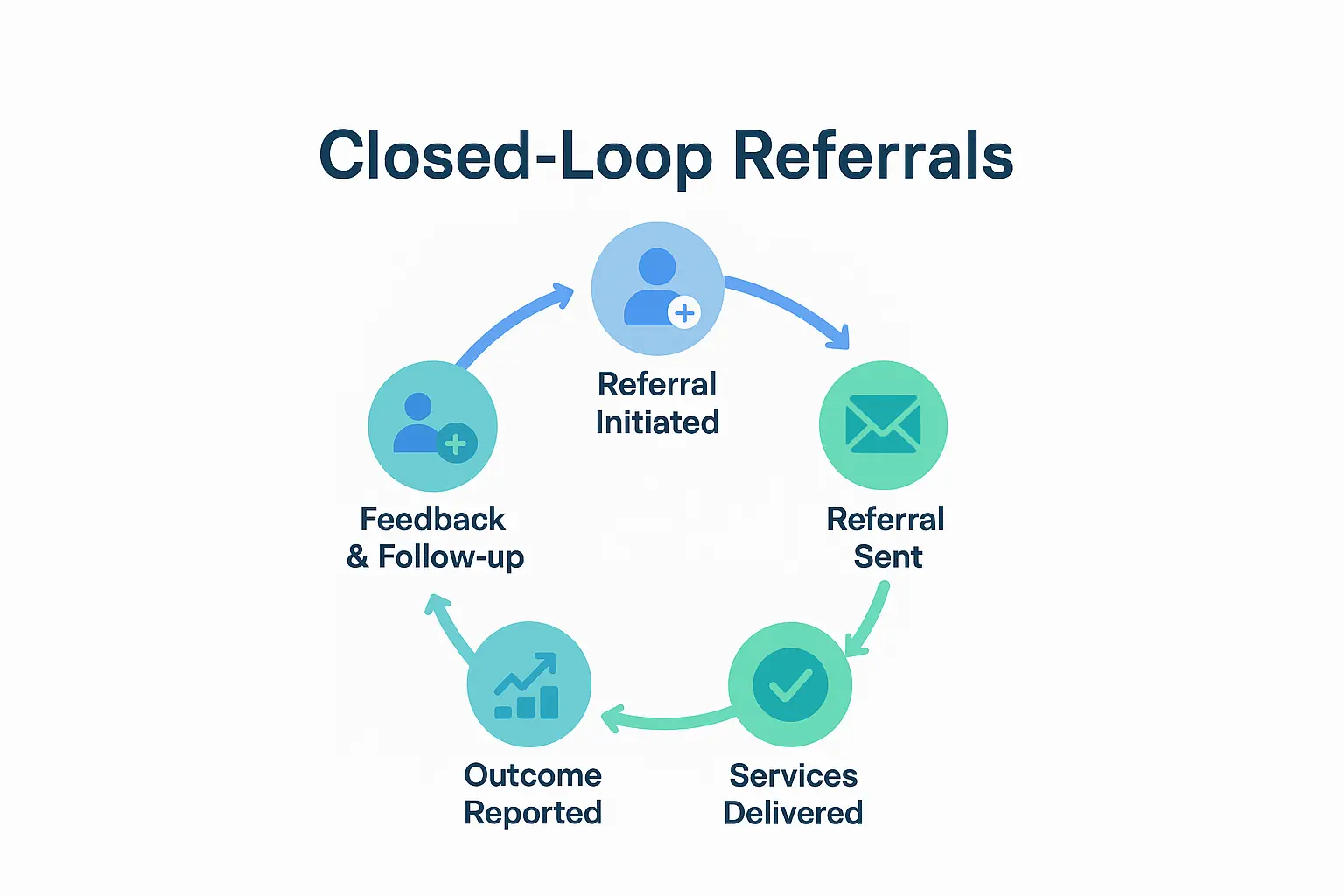
This stems from a variety of reasons. For example, Black, Hispanic, and AIAN people are more likely to delay treatment because of high costs, pushing expensive specialist appointments to the back burner. This leads to deadly consequences, including a shorter life expectancy.
Medical professionals and case workers care deeply for their clients. The best way to prevent leaked referrals is to implement a closed-loop referral system. In this article, the experts at Plan Street will teach you everything you need to know about closed-loop referrals. We deliver the complete roadmap to bulletproof referral tracking, helping your team connect every client with the care they need.
Part 1: Why Traditional Referrals Fail Your Clients
What Makes 65% of Referrals Disappear Into Thin Air?
Complex problems require complex answers. There is no one solution to why referrals disappear, but rather a series of issues that all connect. For example, 38.9% of scheduling attempts have no appointment dates recorded, meaning that the patient never tried and the healthcare provider never followed up.
PlanStreet has identified six fatal gaps like these that lead to lost referrals in traditional systems:
- Inconvenience: With long wait times to see specialists and greater travel time, patients may seek an alternative solution.
- Lack of Ownership: Clinics, specialists, and social services usually have different tracking systems, making it easy to miss a patient or client.
- No Electronic Medical Record (EMR) Integration: If organizations can't or don't track out-of-network appointments, referring providers don't receive vital documentation and feedback.
- Miscommunication: If a referral is sent via phone or email, a patient may accidentally miss the notification.
- Client Confusion: Navigating insurance or government systems can be timely, and clients may not know who to call to actually schedule the appointment or receive help.
- Minimal Follow-up: Case managers, healthcare providers, and other organizations may think that another group is handling the referral. Of malpractice claims related to missed or delayed diagnosis, nearly 50% involve the failure to follow up.
It can be hard to understand the pain these gaps cause until you read a story firsthand. William Spradlin, an aircraft mechanic based in Santa Clara County, CA, had to wait six months to see a physician. After experiencing severe abdominal pain from multiple hernias, he was referred for surgery by his primary doctor in mid-2023.
Despite an initial approval, Spradlin was told the hospital lacked a surgical provider. It took until November to get a consultation, where he was informed he needed to lose weight before surgery. Unable to work due to his condition and restricted by his Valley Health Plan insurance, which few providers outside the county accept, Spradlin lost his job, depleted his savings, and ultimately became homeless.
Stories like these show the heartbreaking and life-threatening consequences of miscommunications that happen in the traditional referral system.
Part 2: What Are Closed-Loop Referrals? (And Why They're Non-Negotiable in 2025)
What Is a Closed-Loop Referral System?
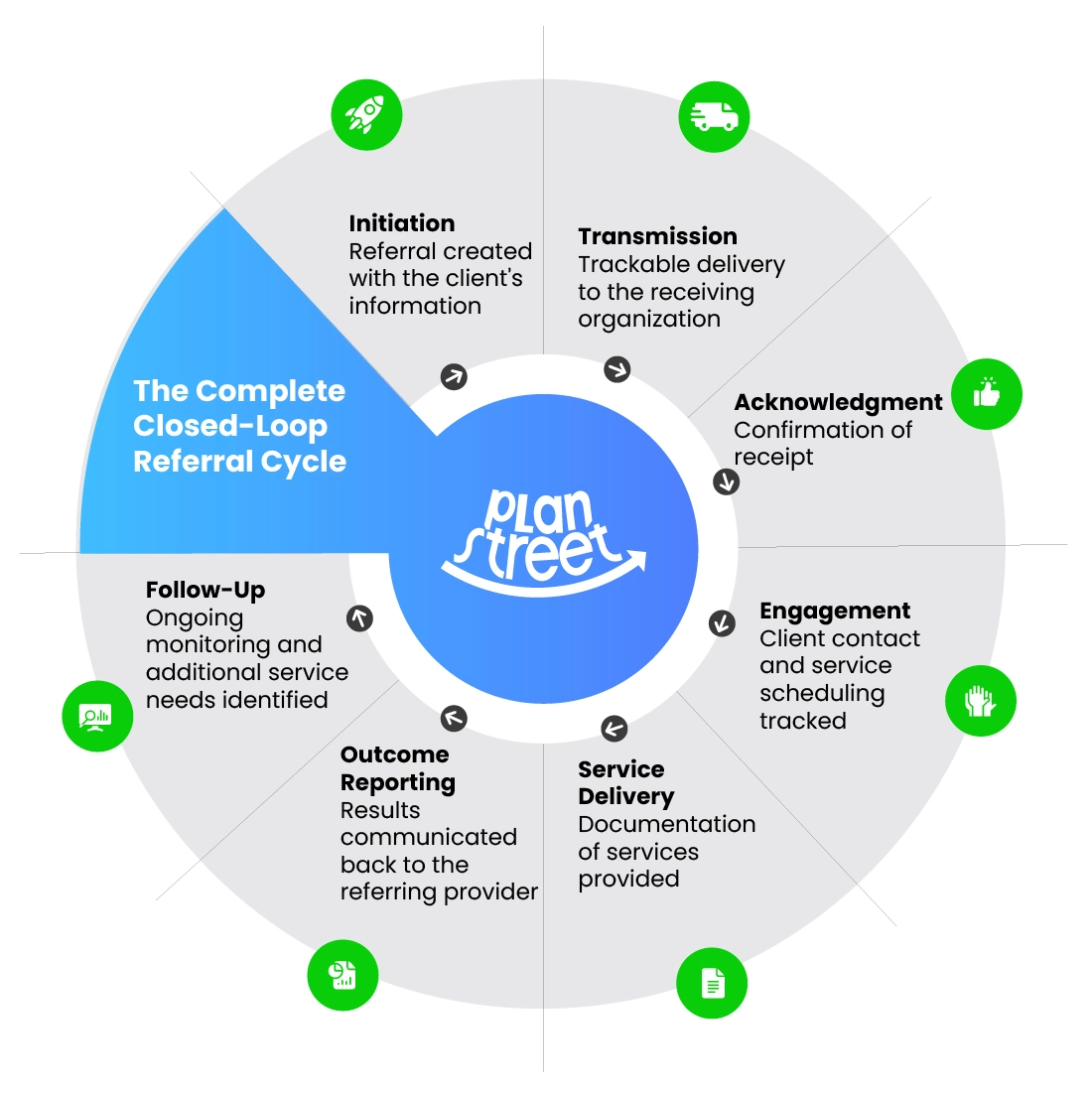
A closed-loop referral system is a process that ensures a referral made from one provider or organization to another is tracked through every step until the patient or client confirms they received the intended services. Systems like these are vital in 2025 because multiple organizations have to manage a client's care.
The Complete Closed-Loop Referral Cycle:
What Are the Benefits of a Closed-Loop Referral?
A closed-loop referral eases the administrative burden, simplifying tracking of critical care and services. Social service and healthcare providers can take control of the care of their clients, implementing case management software like PlanStreet to automate previously complicated tasks.
The benefits of closed-loop referral systems for nonprofits include:
- A time-saving digital approach: Software with workflow management features saves employees an average of 498 hours per year. No more wasted time playing phone tag or shuffling through emails.
- Real-time visibility: Employees can see the status of each referral at every stage.
- Automated alerts: Assign due dates for each stage of the process, then referral management software automatically flags overdue actions.
- Outcome documentation: Behavioral health providers accepting federal funding must follow the Medicaid documentation policy. Built-in compliance and reporting features automate that process, as well as other required documentation.
- Two-way communication: Secure messaging between providers allows them to communicate when convenient—and not wait for both to be free for a phone call.
Why 2025 is the Tipping Point for Adoption of Closed-Loop Referrals
To address the low rates of healthcare referrals to appointments with traditional methods, multiple federal and state agencies have raised the bar or requirements. These regulatory mandates are driving change. Service providers need to keep up with rising requirements through referral management software.
Some of the recent regulatory mandates include:
- Medicaid managed care contract specifications
- Joint Commission standards for care coordination
- State-level social determinants of health initiatives, including the new requirement for closed-loop referrals for Medi-Cal Managed Care Plans and for social services in Virginia under House Bill 1906
Part 3: How Closed-Loop Referrals Transform Care Coordination
How Do Organizations Benefit From Implementing Closed-Loop Systems? The Denver Health Example
In 2017, Denver Health tracked that only 18% of referral cases closed the loop. Once they implemented a closed-loop referral system, that number skyrocketed to 73.3%. The organization benefited through increased patient safety and satisfaction. Additionally, specialty clinicians found more joy in their work because primary care physicians were calling and thanking them for referral notes and care plans.
closed-loop referrals revive healthcare coordination, helping case managers, program directors, organizations, and most importantly, the clients themselves.
For Case Managers
Case managers benefit significantly from closed-loop referral systems because these systems provide clear, real-time visibility into whether clients receive referred services, streamline coordination among providers, and reduce administrative burdens.
- Time Savings: When case managers see all of their referrals they're responsible for in one referral management system, they can quickly follow up with care (rather than digging through emails, case notes, or other tracking methods).
- Clear Accountability: Every provider knows each step in the process, so the case manager only has to worry about what they are responsible for.
- Better Client Relationships: Case managers can provide proactive updates instead of reactive crisis management.
- Reduced Burnout: Case managers can focus on important work like service planning and mapping out use cases for services, and spend less time spinning their wheels on "black hole" referrals.
For Program Directors
Closed-loop referrals give program directors the tools to monitor, manage, and continuously improve their programs, supporting regulatory compliance, maximizing resources, and driving measurable impact.
Case management software like PlanStreet helps program directors:
- Simplify Grant Compliance: Automated outcome tracking and reporting allow program directors to give hard data to funders.
- Improve Success Rates: Outcome data helps program directors clearly see which programs are providing positive, measurable results.
- Enhance Partner Relationships: Professional, reliable referral processes make it easier to work with other organizations.
- Prepare for Audits: A complete documentation trail is always available if needed for grant organizations or the IRS.
For Organizations
Closed-loop referral systems across healthcare, social services, and communities help organizations follow through on their mission statement and increase operational performance, including:
- Revenue Protection: Reduced leakage (lost opportunities where services or billable activities are not completed) and improved reimbursement collection.
- Operational Efficiency: Automation tools like PlanStreet's real-time status monitoring reduce duplicate and manual work.
- Quality Improvement: Access to updated metrics helps providers continuously make services better.
- Competitive Advantage: Organizations that demonstrate better coordination and outcomes tend to be more competitive for contracts and funding.
For Clients (The Most Important Beneficiaries)
Closed-loop referral systems help clients achieve their goals faster, with more confidence and better outcomes, by ensuring that all needed services are actually delivered and tracked—turning referrals into results. Over 60% of patients reported that closed-loop referrals strengthened their trust in providers and helped them understand their care needs better.
Automated referral tracking further helps clients through:
- Reduced Social Barriers: 93% of healthcare workers reported that systems provide "helpful help" in reducing obstacles to social services for patients.
- Fewer Lost Referrals: Closed-loop systems drastically reduce lost referrals compared to open or manual systems.
- Coordinated Care: All providers working from the same information improves their ability to find the right solution for clients.
- Better Outcomes: When social service referrals are completed, clients are more likely to receive services such as food assistance, housing, behavioral health, or medical specialty care, resulting in higher rates of completed treatment and goal achievement.
How Does Technology Enable True Closed-Loop Referrals?
Tracking software makes sure that referrals are completed and reported efficiently across healthcare and social service systems. Key technical capabilities enable quick and easy communication, in-the-moment tracking, and data-driven decision-making, closing the referral loop.
Must-have components of any referral tracking software include:
- Integrated Case Management Platform: Centralizes client data for consistent, shared referral information.
- Secure Messaging Infrastructure: Enables HIPAA-compliant, encrypted communication between providers.
- Real-Time Tracking Dashboard: Provides up-to-date visual status of all referrals for timely action.
- Automated Workflow Engine: Routes referrals and sends alerts to expedite service delivery.
- Outcome Documentation Tools: Collects structured referral outcome data to make it easier to access and understand.
- Analytics and Reporting: Offers insights and trends to optimize referral systems and programs.
- Customizable Referral Workflows: Ability to tailor referral processes based on the population, funding requirements, or agency needs.
Part 4: How to Implement Closed-Loop Referrals in Your Organization
How Do You Choose the Right Closed-Loop Referral Platform?
The right platform should align with your organization's goals, user needs, and technical requirements to maximize referral success and program impact.
At PlanStreet, we recommend utilizing the following 8-point evaluation framework. We also suggest adding questions or requirements for each section that may be personal to your organization.
-
Integration Capabilities
- Does it connect with your existing case management system?
- Can it sync with partner organization platforms?
- What APIs and data standards does it support?
- Can the platform integrate smoothly with your Electronic Health Record (EHR)?
-
Security and Compliance
- Software must be HIPAA-compliant
- SOC 2 Type II validation
- Role-based access controls
- Audit trail capabilities
-
User Experience Design
- Intuitive interface requiring minimal training
- Mobile accessibility for field staff
- Customizable workflows matching your processes
-
Scalability and Performance
- Ability to handle your current and projected referral volume
- Response time under peak loads
- Uptime guarantees and disaster recovery
-
Outcome Tracking Capabilities
- Structured data fields for different service types and information, such as completion notes, client satisfaction, or re-referral needs
- Case boards for quick understanding of a client's needs
- Grant-specific compliance features
-
Partner Network Support
- How many organizations are already connected?
- Does it offer onboarding support for new partners?
- Directory of available services
-
Analytics and Insights
- Real-time dashboard capabilities
- Trend analysis and predictive features
- Benchmarking against industry standards
-
Support and Training
- Implementation timeline and methodology
- Ongoing technical support availability
- User training and change management resources
5 Steps to Implement a Referral Management System
To implement a closed-loop referral system, organizations must thoughtfully plan out integrating technology, engaging fellow service providers, and constantly seek improvement. Expect the initial process to take about eight weeks.
Following a roadmap like the example below can help your organization establish reliable referral workflows, onboard each organization, and give sufficient time for each person to understand every step.
Step 1: Foundation Setting (Weeks 1-2)
- Give everyone an overview of the process and identify the right people to lead the effort.
- Study current referral workflows to understand what's going wrong.
- Define clear success metrics, such as referral completion rate, rejection rate, time to service, and patient satisfaction.
- Develop a change management strategy to help motivate staff adoption and address any resistance to the new system.
Step 2: System Configuration (Weeks 3-4)
- Customize the platform for the way your staff currently likes to work and the different referrals you give.
- Set up user roles and permissions.
- Integrate with electronic health records (EHR) or case management systems for seamless data flow.
- Test security features to comply with HIPAA and additional local, state, or federal requirements.
Step 3: Partner Onboarding (Weeks 5-6)
- Identify community and social service partners critical to referral networks.
- Conduct training sessions for external organizations on platform use and expectations.
- Run pilot referral tests to validate workflows and communication protocols.
- Establish clear referral communication and escalation etiquette between partners.
Step 4: Staff Training and Launch (Weeks 7-8)
- Schedule and complete a comprehensive training program for all internal users.
- Start with a smaller rollout focusing on a few referral types or departments.
- Collect user and partner feedback to identify usability issues and gaps.
- Tweak the system and processes as needed before getting the whole organization on board.
Step 5: Optimization and Growth (Ongoing)
- Monitor performance against success metrics using analytics and reports.
- Continuously refine workflows and address unexpected issues or complications.
- Recruit additional partners to broaden the referral network.
- Leverage advanced platform capabilities like predictive analytics and automation for greater efficiency.
Part 5: Why PlanStreet's Closed-Loop Referral System Outperforms the Competition
What Makes PlanStreet the Clear Choice for Closed-Loop Referrals?
PlanStreet is a comprehensive case management software fully customizable to your organization. Tweak and change our user interfaces and custom reporting solutions, working in tandem with our full-scale suite of services. Whether you need to implement referral tracking, grant management, or anything in between, PlanStreet optimizes every administrative need of your organization.
The 5 Advantages of Using PlanStreet
1. Truly Integrated Case Management
Unlike standalone referral tools, PlanStreet embeds client referral tracking directly into comprehensive case management.
You can see your client's complete history and patterns in one unified view, creating a seamless connection between case planning and referral execution.
- Complete client history and referral patterns in one unified view
- Seamless workflow between case planning and referral execution
- Automated alerts help you respond to any gaps in services
2. Purpose-Built for Human Services
PlanStreet isn't a cookie-cutter solution. It was designed specifically for nonprofits, government agencies, and community organizations.
Our software helps you navigate complex funding requirements from government grants and the private sector. We build each tool with HIPAA, FedRAMP, and other compliance needs in mind.
Our templates and workflows are built specifically for housing, healthcare, employment, and social services.
3. Real-Time Collaboration Features
Working within solitary systems stifles collaboration.
That's why PlanStreet features:
- HIPAA-compliant messaging between organizations
- Document sharing capabilities for assessments and care plans
- Collaborative care planning across multiple providers
4. Advanced Outcome Tracking
At the end of the day, the client matters most.
PlanStreet's advanced outcome tracking features help teams stay on top of every case, guiding them every step of the way, from referral to final evaluation.
PlanStreet offers:
- Customizable outcome measures for different service types
- Automated compliance reporting for grants and contracts
- Impact measurement tools for program evaluation
5. Proven Track Record
The best people to speak for PlanStreet's services are our current clients. We're proud to have worked with nonprofit and community organizations across America. For The Parenting Center, PlanStreet's interface helped them track incoming referrals and where they are at in the program process. This makes it easy to follow up, ensuring that no one in need falls through the cracks.
"PlanStreet gives us a place to keep our client information safe and organized. One of the things we use it for is to track our incoming referrals. Being able to have that information readily available in a place that is organized makes it easier for us to access." - Zeida Forrest, Project Director | The Parenting Center
How PlanStreet Solves the Problems Others Can't
PlanStreet was built to solve issues common amongst nonprofits, healthcare providers, government organizations, and community services managing referrals.
Problem: Referrals get lost between organizations.
PlanStreet Solution: Automated alerts and escalation workflows ensure no referral stays pending beyond designated timeframes.
Problem: No visibility into referral outcomes.
PlanStreet Solution: Built-in outcome documentation with customizable fields for different service types and funding requirements allows each provider to see the conclusion of each referral.
Problem: Compliance reporting is manual and time-consuming.
PlanStreet Solution: Automated report generation with grant-specific templates and real-time data updates helps organizations stay compliant with federal, state, and local referral requirements.
Problem: Partner organizations are resistant to new systems.
PlanStreet Solution: Flexible engagement options allow organizations to use what works best for them, either full platform integration or simple web-based referral acceptance.
How to Get Started With PlanStreet
The best way to understand how PlanStreet works is to schedule a closed-loop referral demo with our experts. They can ask questions about your needs and explain how our platform can be tailored to meet them.
However, if you're just starting your research, feel free to look through our online resources to get a sense of what we're capable of:
If you have any further questions, schedule an introductory call with our team today.
Ready to Eliminate Referral Failures Forever?
Every day you operate without closed-loop referrals, clients fall through the cracks, compliance suffers, and your organization misses opportunities to demonstrate real impact.
But here's the truth that separates successful organizations from the rest: they don't wait for perfect conditions to implement game-changing solutions. They recognize that the cost of inaction far exceeds the investment in transformation.
Your clients deserve the certainty that comes with closed-loop referrals. And with PlanStreet's case management and referral tracking software, you can deliver that certainty while streamlining operations and improving outcomes.
The question isn't whether you can afford to implement closed-loop referrals. The question is whether you can afford not to.