U.S. Companies spend more than $85 billion every year on outdated technology. Similar spending waste can occur in the nonprofit and government sectors when legacy software is not updated in a timely manner.
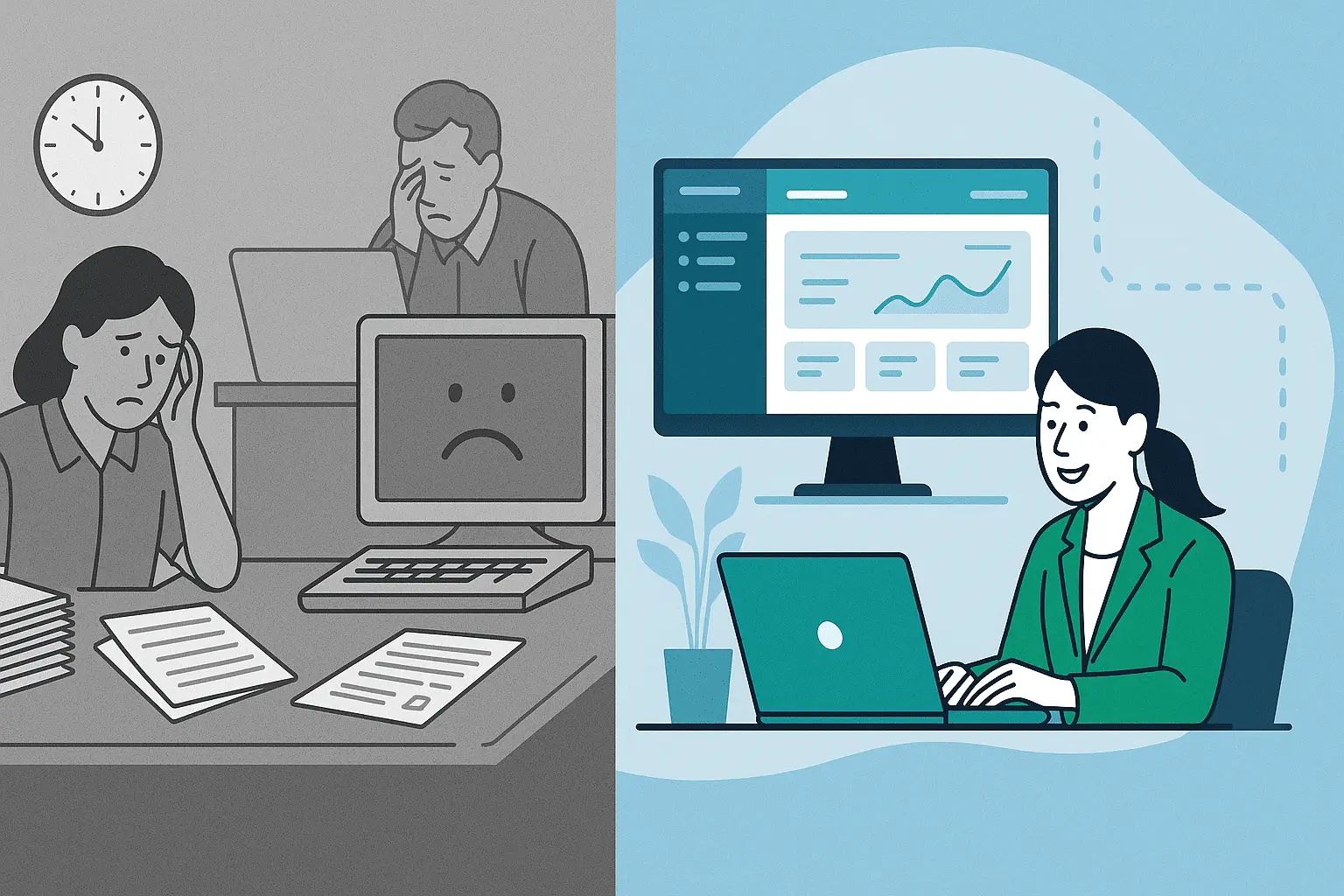
At PlanStreet, we understand that it can feel overwhelming to choose a new software provider, particularly for something as critical as your HMIS (Homeless Management Information System). However, any agency working with unhoused individuals needs a robust solution they can trust to manage their clients in accordance with the requirements outlined by HUD (U.S. Department of Housing and Urban Development).
In this article, we guide you through the 12 signs you need to be aware of so that you can properly replace and implement a new HMIS system before your agency suffers consequences of non-compliance.
Why Legacy HMIS Systems Hold Agencies Back
Technology advances at a rapid rate. In the last ten years alone, AI has now beaten some humans in language or image recognition.
Now consider this in the HMIS space. Legacy HMIS systems were designed for basic compliance and reporting, not for the scale, complexity, and coordination that teams need to provide for the homeless populations in their communities. One of the biggest problems is that legacy HMIS software focuses solely on meeting federal reporting requirements. CoC providers need updated tools to provide the best care for their clients, including:
- Analytics to make data-driven decisions.
- Attendance trackers to ensure no one falls through the cracks.
- Closed-loop referral platforms to guarantee that every client can see the specialist they need.
The 12 Warning Signs It's Time to Upgrade
When you're working in the same software day in and day out, it's easy to get attached to what you know. You may not even realize what other solutions are out there. But if you're noticing any of the signs below, it's time to start researching a new HMIS solution.
1. Slow performance and downtime hurt productivity
On average, an employee wastes 46 minutes of their day when using a legacy system. Legacy HMIS typically runs on older hardware and outdated operating systems. Both of these cause programs to run slower than a cloud-based option. Combine these issues with complex and manual workflows, and your staff is wasting hours on a task that should only take minutes.
Additionally, these systems are not as stable. When suffering frequent outages or failures, that means you have staff on the clock who can't access the information they need to do their jobs correctly.
2. HUD Reporting takes too much manual effort
Any HUD funding recipient via COC homelessness assistance grants must submit electronic Annual Performance Reports (APRs). These templates are lengthy and require extensive information, including:
- Staff responsibilities
- User support
- Governance charter information
Completing these with manual workarounds makes it nearly impossible to remain compliant. You risk including outdated information for your emergency shelters, transitional housing, permanent supportive housing, and more.
3. No real-time dashboards or analytics
When your team can't see information in real-time, you never really know how you're making an impact. And your clients are the ones who suffer. Lack of unified, interactive visualization means teams cannot quickly spot trends (for example, rising shelter occupancy or missed follow-ups), making proactive interventions nearly impossible.
Without the numerical proof of how your CoC has succeeded with past funding, winning more grants can be difficult. It can also hinder collaboration within other community organizations because you don't understand how you can best help one another.
Additionally, if you do land a new grant and that funder has strict reporting requirements, it can be challenging to meet their needs without a robust reporting system behind you.
4. Difficult to scale as programs expand
As your CoC grows, you'll need more tools to best support your clients. An agency that walks clients through both rapid re-housing and permanent supportive housing needs features such as available beds, Medicaid waivers, and case management solutions to track and support each client in the process. A legacy software will hinder your progress, requiring immense funding to build a new tool.
5. Manual intake and referral processes
When carrying out client intake and referral processes, paper or one-size-fits-all solutions simply don't meet everyone's needs. When clients fill out paper forms in person, they often feel rushed. They may not fill out the form as fully and effectively as they can in the comfort of their own home.
Additionally, paper forms require more of a client's time. With digital solutions, conditional logic affects the fields a client needs to fill out. For example, if they answer "no" to a question about mental health, the form skips over that section. This gives case managers more customization options for intake, assessment, and service tracking.
6. Data quality issues across departments and agencies
CoCs often work together with other community organizations to provide the best care for their clients. For example, San Diego County's CoC worked with 211 local nonprofits, health providers, and universities to develop a real-time bed availability tracker and a closed-loop referral engine for medical respite care (acute and post-acute care for homeless individuals who are too weak to recover from a physical illness or injury). Programs of this scale are impossible with legacy HMIS due to:
- Information that's impossible to access from an outside partner
- Lack of real-time data that shows current problems and solutions
- A frequent need for data cleanup and retraining
- An increased likelihood of missing, incomplete, and inconsistent data due to unconnected systems.
7. Staff rely on workarounds instead of system workflows
When staff have to deal with cumbersome workflows, they're more likely to create unapproved workarounds. This could be any of the following:
- Extensive manipulation of exported data.
- Manual data entry across the same system multiple times, wasting hours and causing inconsistent information.
- Recording attendance or client data offline in an unapproved environment (paper, their phone, a notebook, etc.) and then manually inputting it later.
If your staff is dealing with any of these issues, you've outgrown your HMIS.
8. Weak compliance and outdated security standards
Workarounds like the ones listed above increase compliance risk. Additionally, legacy data systems just don't have the same standards as modern cloud software. All legacy software must remain up-to-date with the requirements of their programs, which may include:
When you partner with a cloud HMIS system like PlanStreet, their internal team ensures that the system is always up to date with the latest security requirements. This leaves more time for your staff to focus on the hard work of caring for your clients.
9. Staff complain about usability
71% of people in the homeless services workforce see high rates of turnover. Don't make your team's jobs harder with legacy software.
One of the biggest indicators of when to replace an HMIS system comes from your staff. If your CoC's leadership gets constant complaints from case managers, program directors, IT, or volunteers about legacy software, you need to hear them out. Slow loading times, constant crashes, and missing features all make it more difficult to do their jobs.
10. No mobile support for outreach teams
Many people in homelessness services are out in the field, engaging with individuals and informing the community about services. Without mobile compatibility, they have no way of accessing critical data and information on the go. This stifles their productivity and makes it more difficult to complete essential work within their community, like the Greater Los Angeles Homeless Count.
11. Limited or no integrations with other systems
Legacy systems require custom code or middleware APIs to integrate with necessary housing solutions, including case management, referrals, or grant management software. These systems need to be able to share data to maximize productivity. If not, teams are stuck manually inputting data into each one, which increases errors.
12. High maintenance costs with low ROI
Legacy software requires 3-4 times more maintenance than a modern cloud platform. Rising costs for maintenance, support, and troubleshooting make it harder to deliver a return on investment, particularly for CoCs that need to make every dollar count.
What a Modern HMIS Should Deliver
A modern HMIS in 2025 should deliver a secure, user-friendly platform. It needs real-time data access, seamless integration, compliance, and data-driven decision-making to improve homeless service delivery and coordination.
When looking for a new HMIS, ensure it has all of the following capabilities:
- Real-Time Data and Analytics: Customizable dashboards enable case managers to track KPIs, monitor occupancy, complete referrals, assess client outcomes, and maintain compliance.
- Secure Data Management: Robust security measures like end-to-end encryption, role-based access, audit trails, and cloud backup.
- Case Management Integration: Ties data to each case so that case managers can see a complete picture of each client.
- User-Friendly, Accessible Interface: Streamlines data entry, intake, and assessment, and client navigation workflows to reduce staff burden and errors.
- Workflow Support: Automates routine tasks such as data validation, eligibility checks, reminders, and reporting.
Next Steps: Moving Beyond Legacy Systems with PlanStreet
If you're tired of every HUD report feeling like a marathon, it's time to make a change. Plan your HMIS software upgrade with PlanStreet's impact management platform. Our HMIS tools integrate directly with our case management software, helping you track services, resources, and clients in one place. We work with each CoC directly to build an interface that works best for them and can scale at any time.
Contact our experts today to learn more or schedule a free demo.